Institut Català d'Investigació Química (ICIQ): Envíos recientes
Mostrando ítems 1-20 de 1286
Single atoms of indium on hafnia enable superior CO2-based methanol synthesis
Indium–zirconium oxides rank among the most selective and stable catalysts for CO2 hydrogenation to methanol. Yet, despite extensive research, the mechanistic origin of the exceptional role of monoclinic zirconia remains ...
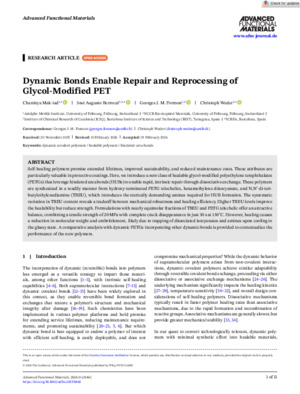
Dynamic Bonds Enable Repair and Reprocessing of Glycol-Modified PET
Self-healing polymers promise extended lifetimes, improved sustainability, and reduced maintenance costs. These attributes are particularly valuable in protective coatings. Here, we introduce a new class of healable ...
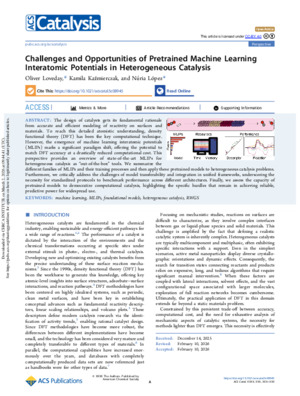
Challenges and Opportunities of Pretrained Machine Learning Interatomic Potentials in Heterogeneous Catalysis
The design of catalysts gets its fundamental rationale from accurate and efficient modeling of reactivity on surfaces and materials. To reach this detailed atomistic understanding, density functional theory (DFT) has been ...
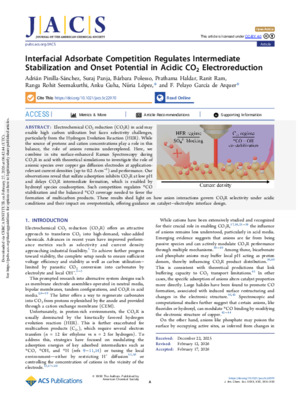
Interfacial Adsorbate Competition Regulates Intermediate Stabilization and Onset Potential in Acidic CO2 Electroreduction
Electrochemical CO2 reduction (CO2R) in acid may enable high carbon utilization but faces selectivity challenges, particularly from the Hydrogen Evolution Reaction (HER). While the source of protons and cation concentrations ...
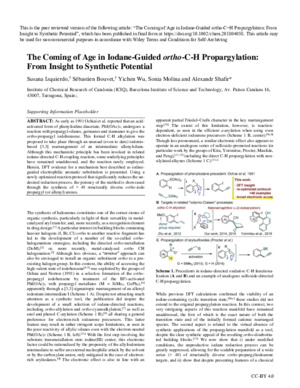
The Coming of Age in Iodane-Guided ortho-C−H Propargylation: From Insight to Synthetic Potential
As early as 1991 Ochiai et al. reported that an acid-activated form of phenyliodine diacetate, PhI(OAc)2, undergoes a reaction with propargyl-silanes, germanes and stannanes to give the ortho-propargyl iodobenzene. This ...
Electrochemical β-Lactam Probes for Rapid Detection of β-Lactamases: From Solution-Phase Activation toward Surface-Integrated Biosensing
Rapid detection of antibiotic-resistant bacteria is a crucial tool in the global fight against antimicrobial resistance, helping to limit the spread of resistance and guide treatment decisions. Here, we report the design, ...
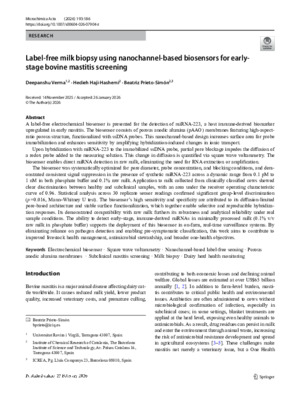
Label-free milk biopsy using nanochannel-based biosensors for early-stage bovine mastitis screening
A label-free electrochemical biosensor is presented for the detection of miRNA-223, a host immune-derived biomarker upregulated in early mastitis. The biosensor consists of porous anodic alumina (pAAO) membranes featuring ...
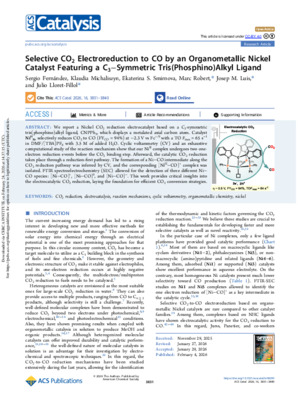
Selective CO2 Electroreduction to CO by an Organometallic Nickel Catalyst Featuring a C3–Symmetric Tris(Phosphino)Alkyl Ligand
We report a Nickel CO2 reduction electrocatalyst based on a C3-symmetric tris(phosphino)alkyl ligand, CNPPh3, which displays a metalated axial carbon atom. Catalyst NiHBr selectively reduces CO2 to CO (FYCO = 94%) at −2.3 ...
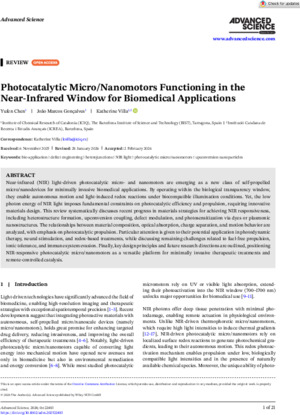
Photocatalytic Micro/Nanomotors Functioning in the Near-Infrared Window for Biomedical Applications
Near-infrared (NIR) light-driven photocatalytic micro- and nanomotors are emerging as a new class of self-propelled micro/nanodevices for minimally invasive biomedical applications. By operating within the biological ...
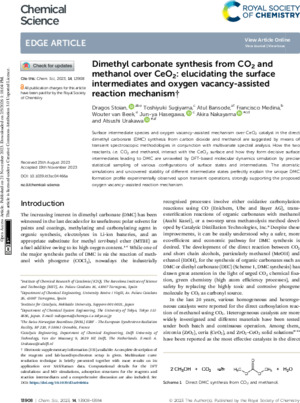
Dimethyl carbonate synthesis from CO2 and methanol over CeO2: elucidating the surface intermediates and oxygen vacancy-assisted reaction mechanism
Surface intermediate species and oxygen vacancy-assisted mechanism over CeO2 catalyst in the direct dimethyl carbonate (DMC) synthesis from carbon dioxide and methanol are suggested by means of transient spectroscopic ...
Peroxisomes and PPARs: Emerging role as master regulators of cancer metabolism
Cancer is a disease characterized by the acquisition of a multitude of unique traits. It has long been understood that cancer cells divert significantly from normal cell metabolism. The most obvious of metabolic changes ...
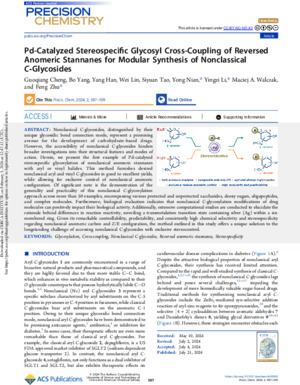
Pd-Catalyzed Stereospecific Glycosyl Cross-Coupling of Reversed Anomeric Stannanes for Modular Synthesis of Nonclassical C-Glycosides
Nonclassical C-glycosides, distinguished by their unique glycosidic bond connection mode, represent a promising avenue for the development of carbohydrate-based drugs. However, the accessibility of nonclassical C-glycosides ...
Sensing Platform Based on Gold Nanoclusters and Nanoporous Anodic Alumina for Preeclampsia Detection
Preeclampsia is a pregnancy-specific hypertensive syndrome recognized as the leading cause of maternal and fetal morbidity worldwide. Early diagnosis is crucial for mitigating its adverse effects, and recent investigations ...
Novel Asymmetric Iron Porphyrins for Photocatalytic CO2 Reduction to CH4
Developing earth-abundant transition metal catalysts for CO2 reduction is a promising approach for sustainable energy conversion. Here, the synthesis and photocatalytic activity of two novel asymmetric iron porphyrin ...
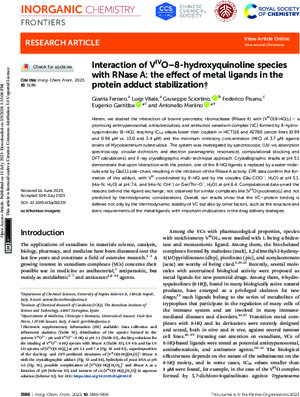
Interaction of VIVO–8-hydroxyquinoline species with RNase A: the effect of metal ligands in the protein adduct stabilization
Herein, we studied the interaction of bovine pancreatic ribonuclease (RNase A) with [VIVO(8-HQ)2] – a promising antitrypanosomal, antituberculosis, and antitumor vanadium complex (VC) formed by 8-hydroxyquinolinato (8-HQ), ...
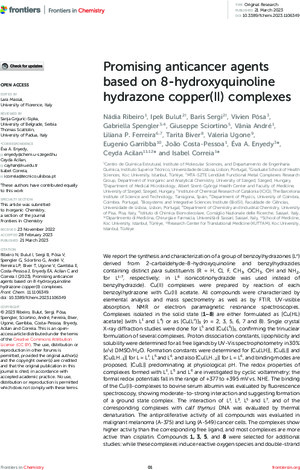
Promising anticancer agents based on 8-hydroxyquinoline hydrazone copper(II) complexes
We report the synthesis and characterization of a group of benzoylhydrazones (Ln) derived from 2-carbaldehyde-8-hydroxyquinoline and benzylhydrazides containing distinct para substituents (R = H, Cl, F, CH3, OCH3, OH and ...
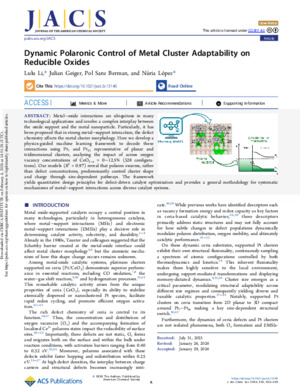
Dynamic Polaronic Control of Metal Cluster Adaptability on Reducible Oxides
Metal–oxide interactions are ubiquitous in many technological applications and involve a complex interplay between the oxide support and the metal nanoparticle. Particularly, it has been proposed that in strong metal–support ...
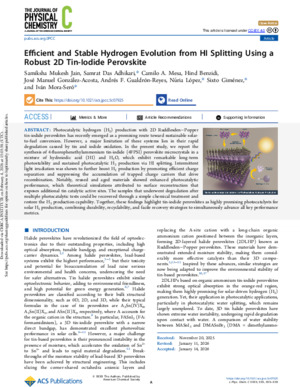
Efficient and Stable Hydrogen Evolution from HI Splitting Using a Robust 2D Tin-Iodide Perovskite
Photocatalytic hydrogen (H2) production with 2D Ruddlesden–Popper tin-iodide perovskites has recently emerged as a promising route toward sustainable solar-to-fuel conversion. However, a major limitation of these systems ...
Nanoporous anodic alumina-based gas diffusion layers for the electroreduction of CO2
The manufacture of a novel type of gas diffusion electrode (GDE) for the electroreduction of CO2, based on nanoporous anodic alumina gas diffusion layers (GDLs), is described. The GDE consists of an array of aligned pores ...
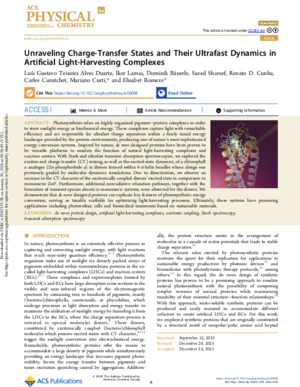
Unraveling Charge-Transfer States and Their Ultrafast Dynamics in Artificial Light-Harvesting Complexes
Photosynthesis relies on highly organized pigment–protein complexes in order to store sunlight energy as biochemical energy. These complexes capture light with remarkable efficiency and are responsible for ultrafast charge ...
